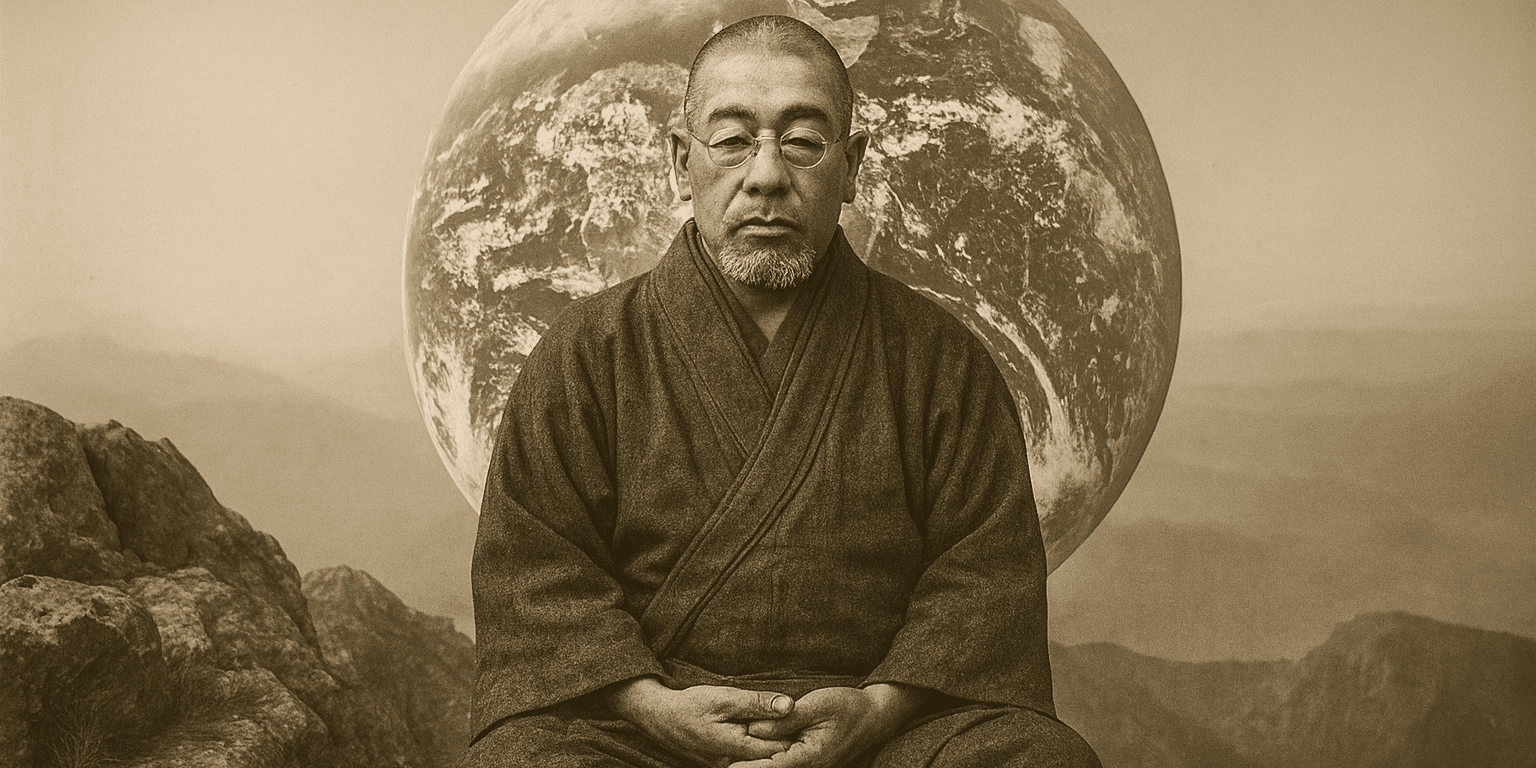
Most Reiki students learn a simple tale: Mikao Usui fasted on Kurama mountain, received a revelation, and a healing system was born in a flash of light. But the real history, the one revealed through the work of Reiki historian Justin B. Stein, PhD, is far more interesting. It’s more human, more complex, and—ironically—much truer to the spirit of the practice we carry today. The deeper story doesn’t remove the mystery of Reiki; it simply places that mystery inside a larger cultural and historical landscape.
Stein often summarizes it this way in interviews:
“Usui wasn’t a lone mystic on a mountain. He was a deeply educated man drawing on many healing traditions of his time.” — Justin Stein, Reiki Lifestyle Podcast (2025)
At the end of the 19th century and the beginning of the 20th, Japan was alive with new ideas. Western psychology was arriving. Buddhism was adapting to modern pressures. Breathwork, hypnotism, “mind-cure,” spiritual therapies, and hands-on healing were everywhere. People were hungry for practical ways to bring mind, body, and spirit into harmony.
Reiki emerged inside this world—not apart from it.
In fact, several decades before Usui began teaching, the Zen priest Hara Tanzan was already proposing a striking theory of psychosomatic healing. In 1869 he suggested that enlightenment functioned like an energetic substance in the brain, while “unenlightenment” was a fluid produced by the spine. Illness, he argued, came from the two mixing incorrectly. Meditation, he believed, could alter the flow and restore clarity and health.
Much of this sounds bizarre today, yet the foundation was radical for its time: the mind, the body, and spiritual awareness form one continuous system.
This environment made it completely natural for Usui and his contemporaries to experiment with healing touch, breath, intention, and inner cultivation. Stein notes that early Reiki was one of many spiritual-therapeutic systems working with these ideas, but Usui did something distinctive: he linked healing with personal ethics and spiritual refinement. The precepts, the meditation practices, the focus on character—these were not optional add-ons. They were the framework that held the whole system together.
When Reiki crossed the Pacific, it transformed again. Hawayo Takata, the woman who introduced Reiki to Hawaiʻi and the mainland United States, reshaped the system in ways that helped it survive. She used language her community could accept. She emphasized the idea of “universal life-force energy,” a phrase still widely used but not a literal translation of reiki. She structured trainings clearly and introduced high fees, which—contrary to online myths—reflected Japanese norms of the era as well.
Stein puts it simply:
“Reiki became global not because it stayed Japanese, but because Takata made it understandable to the people she taught.” — Justin Stein, Ready Set Reiki Webinar
The result was a system that could be taught quickly, practiced immediately, and passed from person to person through direct experience. Reiki spread through relationships, not organizations. One practitioner treated a friend. That friend became curious. Someone eventually took a class. Reiki flowed the way water moves through a landscape—following the shape of human connection.
After World War II, Reiki nearly vanished from public life inside Japan. Legal restrictions on spiritual healing and shifting cultural attitudes pushed it underground. By the 1980s, most Japanese people assumed Reiki had died out. Then something unexpected happened: Reiki returned to Japan—but this time through the West. Students who encountered “Western Reiki” were surprised to learn that a practice rooted in their own culture had been flourishing abroad for decades.
This return sparked renewed interest, new lineages, and rediscovery of pre-war documents. It was a second birth for Reiki inside its homeland.
All of this leads to one of Stein’s central conclusions: Reiki has always been evolving.
Usui adapted practices from Buddhism, psychology, martial culture, and the healing arts of his time. Hayashi emphasized clinical structure and anatomical hand positions. Takata reshaped the system for Western students. Every generation has added something, refined something, or reinterpreted something. This is not a flaw—it is vitality.
Or as Stein puts it:
“Authenticity in Reiki is not about purity. It’s about coherence—practices passed from teacher to student in a living tradition.”
Even Usui hinted at this flexibility. In the Hikkei, he wrote that the purpose of Reiki was simple:
“to improve the mind and body, and to guide people to a happier life.”
That purpose has never changed.
What does all of this mean for us today?
It means that Reiki did not fall from the sky. It was shaped by real people who were responding to the spiritual, cultural, and medical questions of their time. It means that Reiki has always lived in the space between spirituality and medicine, where human beings seek meaning and relief. It means that no lineage holds the whole truth. And it means that your practice—your sincerity, your presence, your daily refinement—is part of Reiki’s ongoing story.
Usui offered a simple compass for this work:
Just for today, do not worry.
Just for today, do not anger.
Be grateful.
Work diligently.
Be kind to others.
Everything else is variation.
About Justin B. Stein, PhD
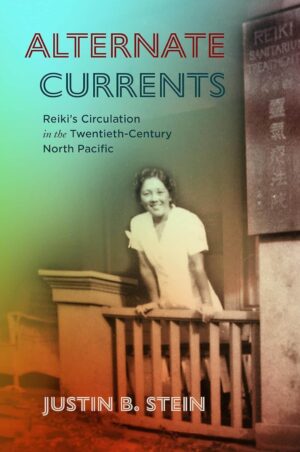
Justin B. Stein is a leading historian of Reiki, specializing in its origins, early development in Japan, and global spread. He draws on rare Japanese sources, archival documents, and interviews with lineage holders to offer one of the clearest scholarly views of how Reiki actually evolved. His research is widely referenced by Reiki teachers, historians of religion, and practitioners seeking accurate history.
His new book is now available on Amazon: Buy here
You can also follow his ongoing work on Facebook and Academia.edu:
- Facebook: https://www.facebook.com/
justinsteinreikiresearch - Academia.edu: https://justinstein.academia.
edu/research