Most Reiki practitioners have never been taught Reiki meditation. Even students who have practiced Reiki for years often encounter meditation only as relaxation, visualization, or something optional to do before or after hands-on treatment. Historically, this was not the case.
In the earliest structure of Reiki training, meditation was one of the primary ways students learned to stabilize their bodies so Reiki could function clearly. It was not separate from Reiki practice. It was part of the training that made the practice work.
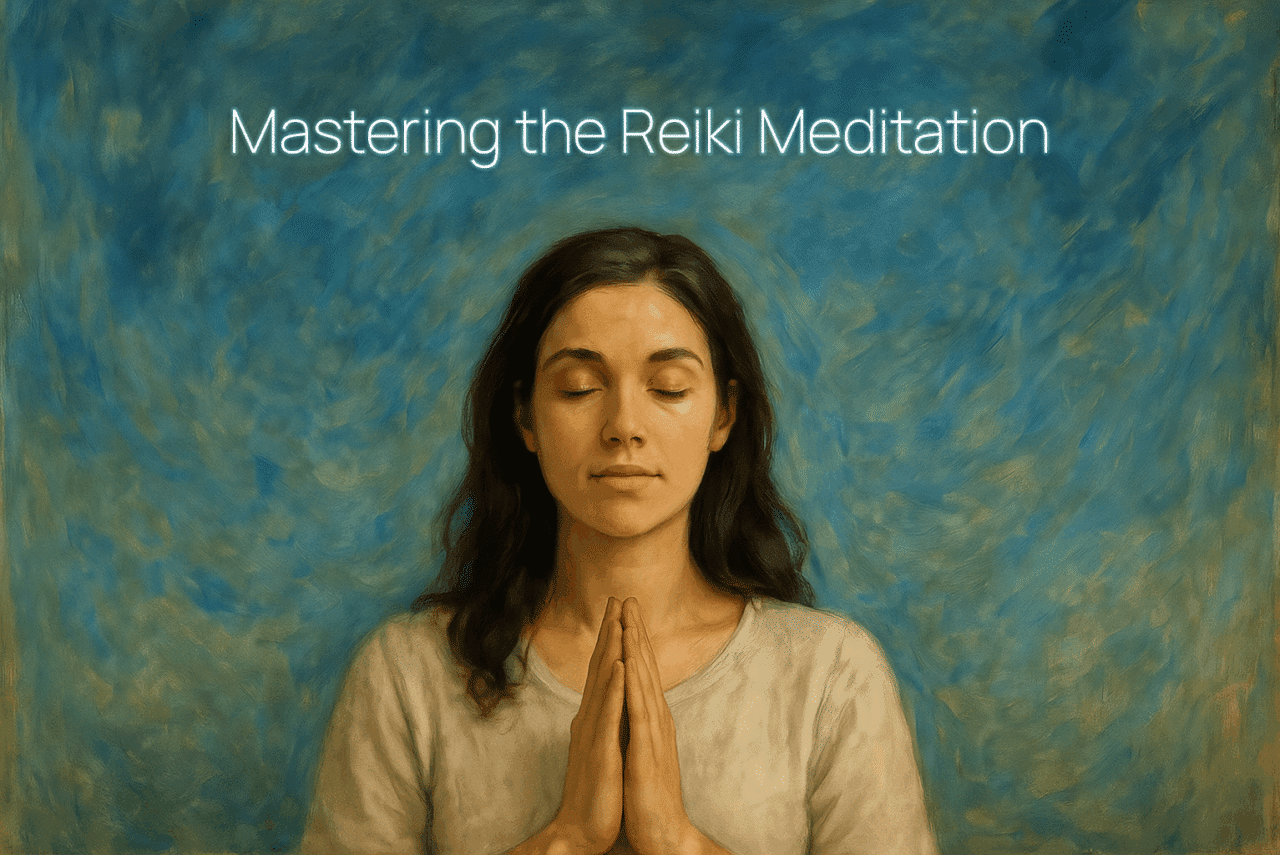
As explained in Mastering the Reiki Meditation, early Reiki students practiced meditation to repeatedly draw the light of Reiki through the body so that obstruction could dissolve and the heart‑mind, kokoro, could become steady. Meditation was not meant to produce experiences. It was meant to establish condition.
Meditation Was the Foundation of Training
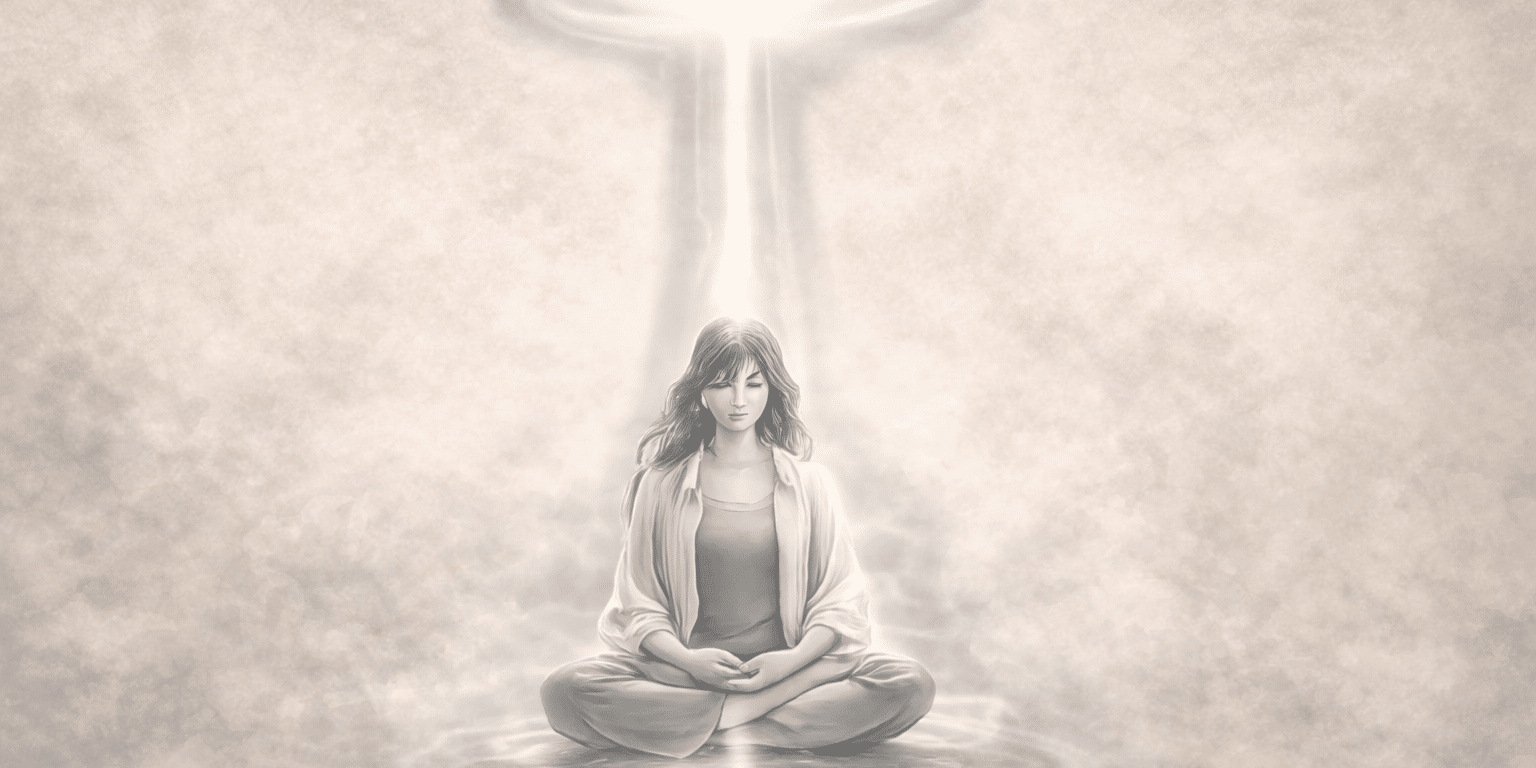
In Usui’s system, meditation, hands-on practice, the Reiki Precepts, and repeated initiations were all expressions of the same training process. Students learned to orient attention above the head toward the Reiki light, then draw that light downward through the body to the seika tanden, the body’s center of stability.
Over time the body changed. Attention settled more easily, breath deepened naturally, and the practitioner interfered less with Reiki. Early Reiki training worked through repetition rather than explanation. Students were not asked to analyze their experience. They were simply asked to sit again the next day and repeat the practice.
What Reiki Meditation Actually Does
Reiki meditation does not aim to produce special states. Its purpose is to condition the body so Reiki can be received without resistance.
The structure is simple: orient to the light above the head, draw that light downward through the body, allow tension and obstruction to dissolve, and remain in stillness. With daily repetition, the body begins to recognize the pattern. Settling happens sooner, the lower body becomes grounded, and Reiki practice becomes steadier and less effortful.
Why This Practice Disappeared
Modern Reiki training often begins with hand positions and healing techniques, but historically the sequence ran in the opposite direction. Students first trained the body to remain steady while Reiki descended through the crown and spine into the lower center. Hands-on practice developed from that foundation.
When meditation disappears from training, that foundation is lost. Reiki may still function, but the practitioner often experiences it as inconsistent or dependent on mood and energy. Meditation restores the stability that early Reiki training relied on.
Restoring the Practice
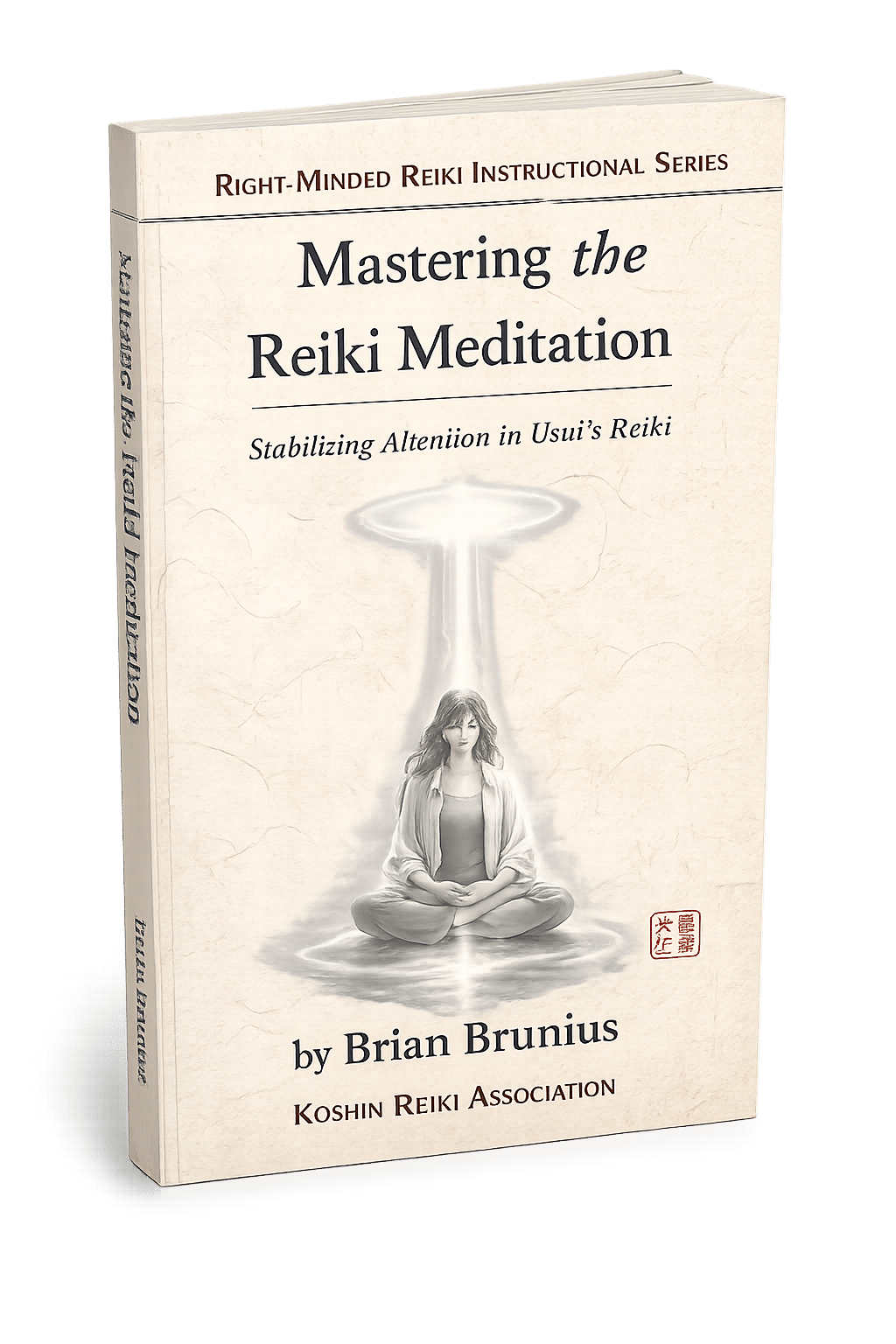
To help students recover this missing foundation, I wrote Mastering the Reiki Meditation: Stabilizing Attention in Usui’s Reiki. The book presents the structure of Reiki meditation, explains how it functioned in early training, and includes a complete daily practice that can be done in as little as five minutes.
For those who prefer guided instruction, I also teach this meditation step-by-step in the Mastering Reiki Meditation online course, which includes guided practice sessions and detailed instruction in the full meditation.
Continue the Exploration
If you are interested in the deeper foundations of Reiki practice, its history, and how it becomes embodied through daily training, you can explore these themes in the Substack publication “Living with Reiki.”
There the focus is on what it means to live with Reiki over the long path, not only as a
healing practice but as a way of cultivating the heart-mind in ordinary life.
👉 Subscribe on Substack to keep reading.