Most of us assume time moves like a river, the past flowing behind us and the future approaching. But if we examine our own experience carefully, we see something different.
When you regret the past, you are not entering the past. You are activating memory. When you worry about the future, you are not entering the future. You are rehearsing projection. Both occur now. The only place experience actually unfolds is in this present moment.
What Usui Expected From His Students
Kokoro is often translated as “heart,” “mind,” or “heart-mind,” but in practice it refers to the condition of the whole person: how we meet circumstances, how we respond under pressure, and how steady our attention and conduct remain in daily life.
If kokoro is unstable, Reiki practice becomes unstable. If kokoro becomes steady, Reiki begins to function naturally. For Usui, this was the starting point.
The Four Practices of Self-Cultivation
Usui did not teach self-cultivation as an abstract philosophy. He gave his students a small set of daily practices designed to refine kokoro through repetition.
These practices formed the core of early Reiki training:
- The Reiki Precepts (Gokai) – A daily discipline for stabilizing the mind and reducing anger, worry, and other disturbances that interfere with clarity.
- Daily Reiki self-treatment – A simple discipline of allowing Reiki to work through one’s own body each day.
- Reiki meditation (jyoshin kokyu-ho) – A practice of allowing Reiki to fully inhabit the practitioner so that the heart-mind becomes less reactive and more available.
- Waka poetry contemplation – Students contemplated selected poems, often from the Meiji emperor, not for interpretation but to allow their orientation of mind to gradually shift through repeated contact with right-mindedness.
Together, these practices formed Usui’s system of self-cultivation. They were not optional exercises. They were the work itself.
Removing Interference
One of the most important ideas in Usui’s teaching is that Reiki does not need to be strengthened or developed.
The connection to Reiki is already present after initiation. What cultivation does is remove the habits, tensions, and disturbances that interfere with it.
The work is not to gain something new. It is to become clear enough that Reiki can function without obstruction.
Over time this changes the practitioner. Effort decreases. Reactivity softens. The body learns the difference between interfering and allowing. Reiki stops feeling like something we must manage and begins to feel like something already present.
Reiki as a Way of Living
This perspective can be surprising to modern practitioners.
Today Reiki is often described primarily as a healing modality. But in Usui’s original framework, healing practice grew out of something deeper: the steady cultivation of the practitioner themselves.
Reiki was a way of forming a person. A way of refining attention, conduct, and presence until helping others became natural rather than effortful.
A Book About the Structure of Usui’s Training
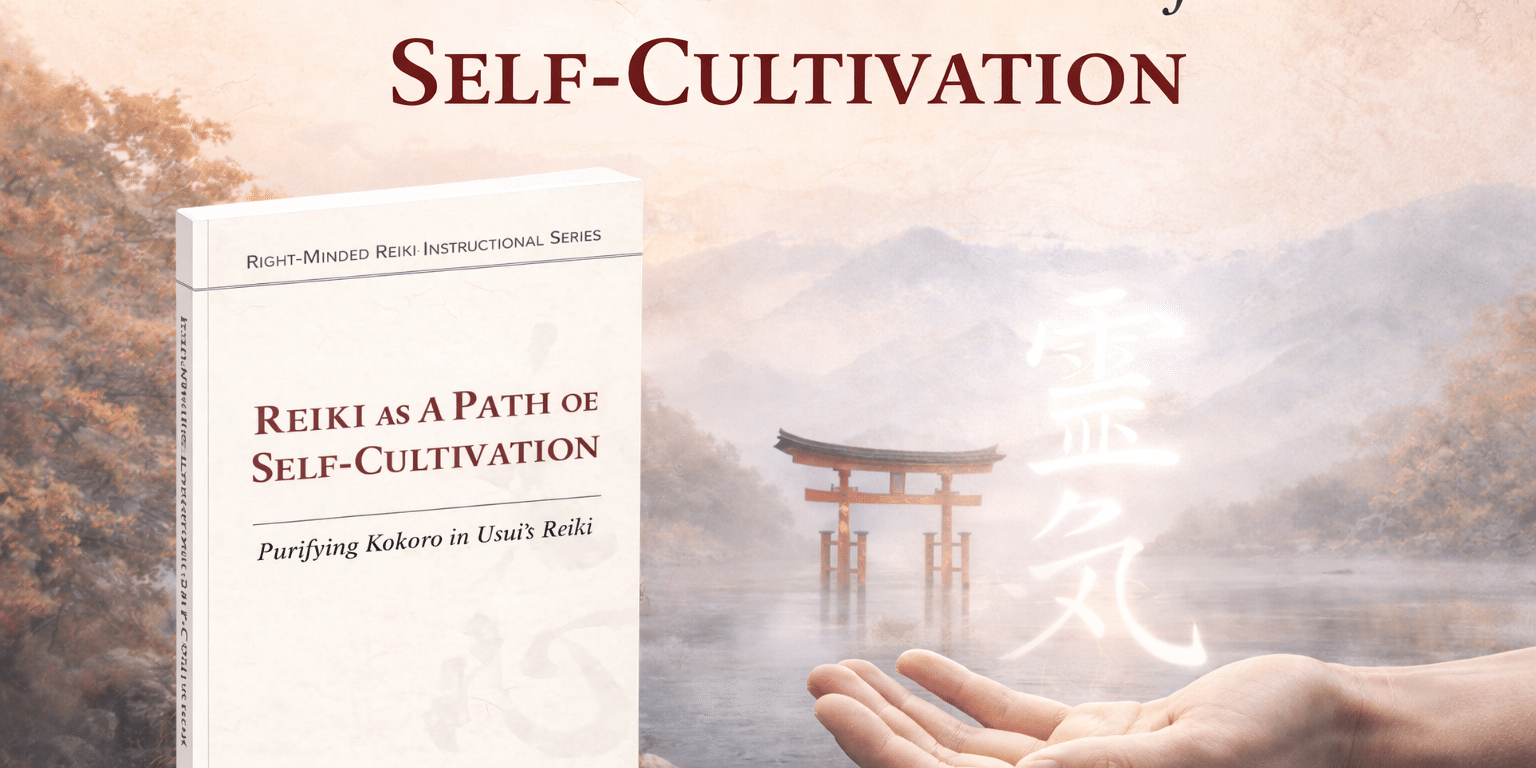
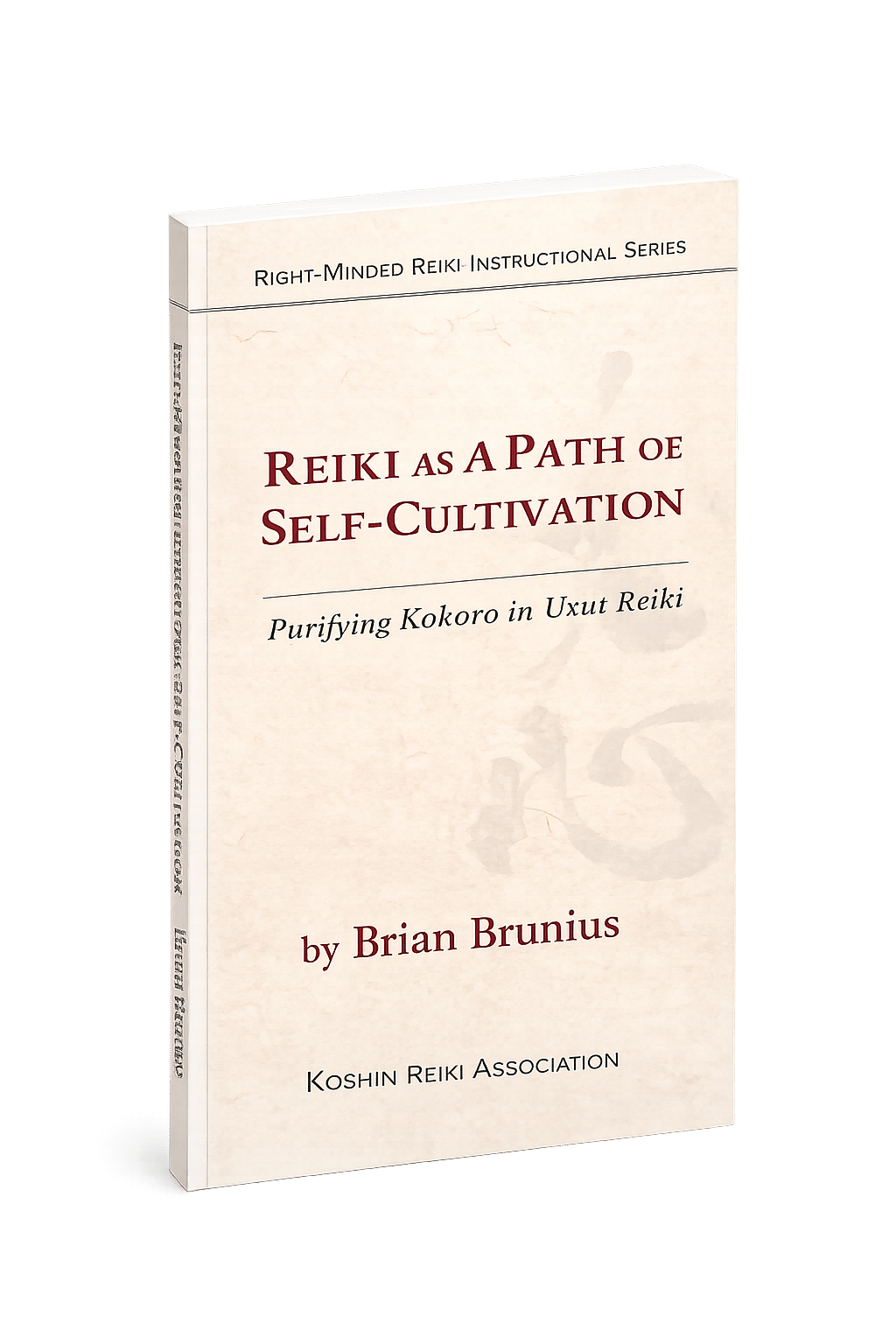
The book “Reiki as a Path of Self-Cultivation: Purifying Kokoro in Usui’s Reiki” explores this dimension of the system.
Rather than presenting Reiki as a technique or promising dramatic experiences, the book
examines how Usui structured training and why purification of kokoro was placed at the center of the practice.
For practitioners who want to understand Reiki at its roots, this perspective shifts the focus away from chasing experiences and toward something quieter and more demanding: the steady training of the person who practices Reiki.
Continue the Exploration
If you are interested in the deeper foundations of Reiki practice, its history, and how it becomes embodied through daily training, you can explore these themes in the Substack publication “Living with Reiki.”
There the focus is on what it means to live with Reiki over the long path, not only as a
healing practice but as a way of cultivating the heart-mind in ordinary life.
👉 Subscribe on Substack to keep reading.