Clarifying a Common Misunderstanding in Reiki Practice
In recent years, some Reiki writers have suggested that the essence of Reiki practice is to “forget the self,” discard all thoughts, and realize that there is no practitioner, no patient, and nothing to give or receive during treatment. According to this interpretation, Reiki is not something we practice but something we simply “are.”
These statements sound profound and spiritually appealing. They borrow language from Zen and other Japanese contemplative traditions. But when we look closely at the historical sources of Reiki and the structure of actual practice, this interpretation raises serious problems for students.
It risks replacing a practical training method with an abstract philosophy.
For that reason, it is worth clarifying what the early sources actually show.
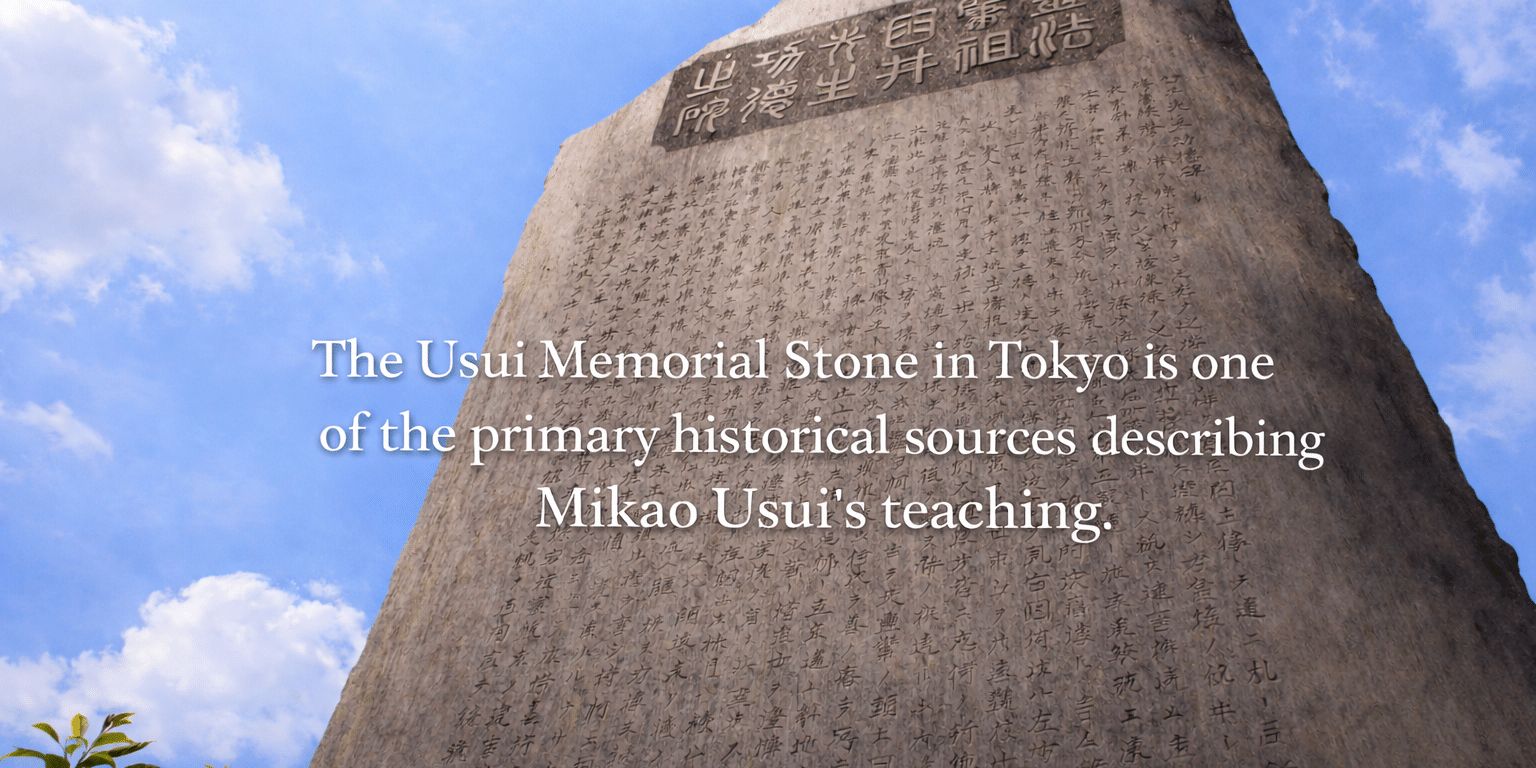
Tomita Kaiji’s 1933 book, written by an early Reiki student from the 1920s, describes Reiki treatment as a straightforward healing method in which practitioners sense disturbances and place their hands accordingly. Other early descriptions, including newspaper reports and Hayashi-lineage materials, likewise focus on clinical practice.
In other words, Reiki was taught as a method of training and application, not as a philosophical doctrine about the non-existence of the self.
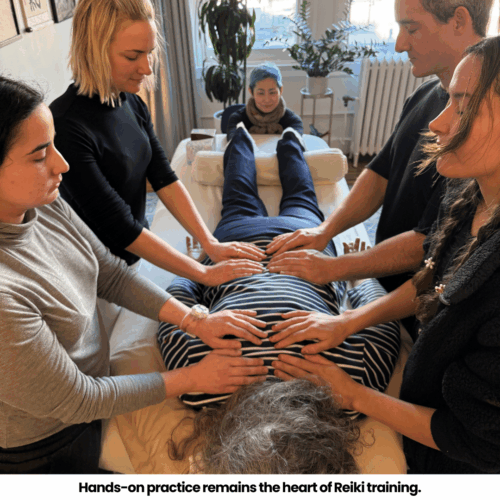
A practitioner treated a patient. Hands were placed on the body. Sensations were observed.
Healing effects were evaluated.
The Problem with Importing Zen Metaphysics
The language of “no-self,” “no-mind,” and the “Great Death” comes from Zen and related contemplative traditions within Japanese Buddhism. These ideas belong to long philosophical and contemplative lineages that developed over centuries.
There is nothing wrong with studying Zen. But when these concepts are imported into Reiki and presented as if they were central teachings of Mikao Usui, we risk distorting the historical record.
The surviving Reiki materials from the early period do not present Reiki primarily as a system built around realizing the non-existence of the self.
Instead, they emphasize something far more grounded: the cultivation of body and mind through practice.
The phrase shinshin kaizen in Usui’s teaching refers to the improvement or refinement of body and mind. It points to a process of cultivation rather than a philosophical conclusion about the nature of the self.
The Role of the Reiki Precepts
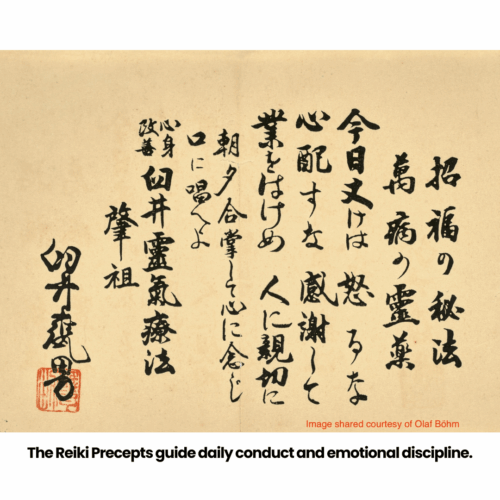
The Reiki Precepts guide the cultivation of our inner life and our conduct in the world.
Just for today
Do not anger
Don’t worry
Be grateful
Work diligently
Be kind to others
These are practical instructions for daily life. They shape how we respond to situations, how we relate to others, and how we cultivate stability in our inner life.
They do not depend on philosophical doctrines about the non-existence of the self.
Why This Matters for Students
When Reiki is framed primarily as a philosophy of “no-self,” students often become confused about what they are actually supposed to do.
Some begin to believe that:
- treatment should happen without attention
- sensations should be ignored or dismissed
- nothing meaningful is occurring during practice
- technique and training are unnecessary
In extreme cases, students are told that recognizing heat, tingling, or other sensations is evidence of being “caught in the self.”
This approach does not help practitioners develop skill. It discourages observation, learning, and disciplined practice.
The early Reiki tradition did the opposite.
Students practiced repeatedly. They observed carefully. They learned from experienced teachers. Skill developed through lived use of the teachings.
Philosophical speculation was not the center of the system.
How Reiki Practice Actually Works
A practitioner does not need to resolve philosophical questions about the existence or non-existence of the self. Nor is it necessary to interpret Reiki through Zen philosophy or any other spiritual framework. Reiki practice is simple and unfolds in ordinary ways.
In daily life, practitioners reflect on the Reiki Precepts, usually in the morning and evening, allowing them to shape the condition of the heart and mind throughout the day.
In personal practice, one may sit quietly and place the hands on the body, observing calmly the sensations and responses that arise.
In class, students receive reiju from their teacher and develop their skills through repeated hands-on practice and guidance. Early Reiki training was built around regular meetings where students practiced together and received repeated reiju from the teacher.
Over time, this steady practice naturally refines the mind and heart. Attention becomes calmer and more stable. Compassion grows. Ethical conduct strengthens.
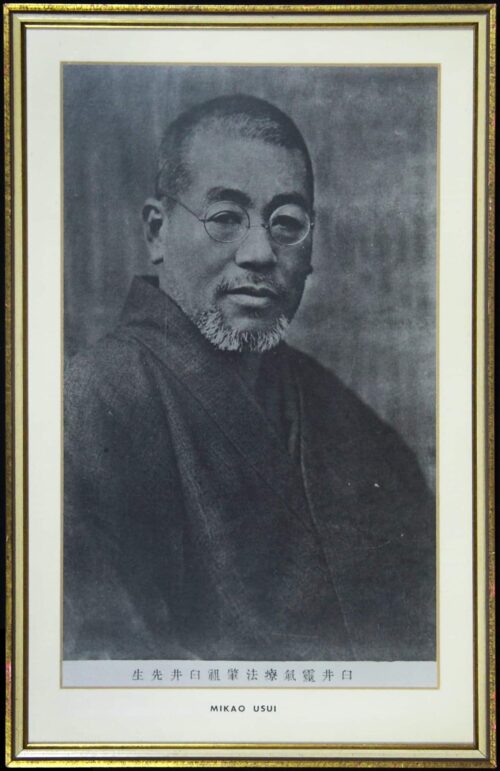
Mikao Usui (1865–1926), founder of the Usui Reiki system.
A Tradition of Practice, Not Abstraction
Reiki emerged in early twentieth-century Japan as a practical discipline for cultivating well-being and helping others. Its strength lies in its accessibility and its simplicity.
When we overlay complex metaphysical interpretations onto the system, we risk obscuring that simplicity.
Students benefit most when Reiki is presented as what it originally was: a path of disciplined practice that refines the heart-mind through experience, ethical living, and compassionate action.
There is no need to erase the practitioner in order to practice Reiki.
It is enough to sit quietly, place the hands, and practice with sincerity.
Over time, the practice itself clarifies what Reiki is.
Continue the Exploration
If you are interested in the deeper foundations of Reiki practice, its history, and how it becomes embodied through daily training, you can explore these themes in the Substack publication “Living with Reiki.”
There the focus is on what it means to live with Reiki over the long path, not only as a healing practice but as a way of cultivating the heart-mind in ordinary life.
👉 Subscribe on Substack to keep reading.