One of the strange things about Mount Kurama is that almost nothing on the mountain mentions Reiki. People arrive expecting otherwise. After all, this is the mountain associated with Mikao Usui’s retreat in 1922. Reiki practitioners come from all over the world imagining there will be giant monuments, museums, sacred markers, or at least signs talking about the birth of Reiki.
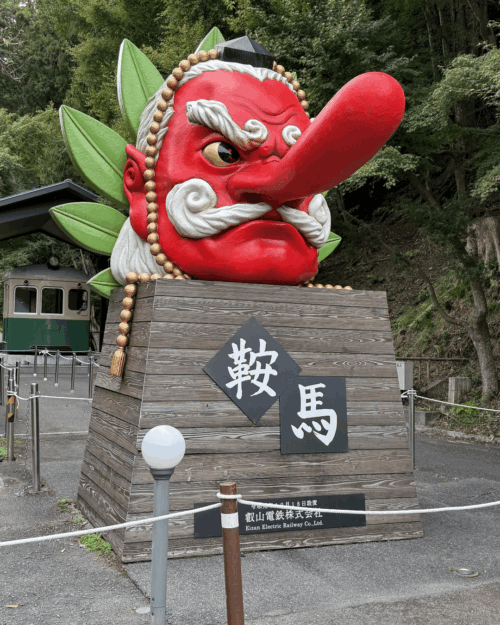
Instead, you arrive at a quiet train station in a small mountain village north of Kyoto. There’s a giant tengu head outside the station, a river running beside the narrow road, and a handful of small shops stretching toward the mountain. By the time you step off the train at Kurama Station, the city already feels very far away.
Then the mountain begins.
At the main gate, pilgrims borrow wooden walking sticks from stands beside the path. At first they seem almost unnecessary. Twenty minutes later most people are very grateful to have one.
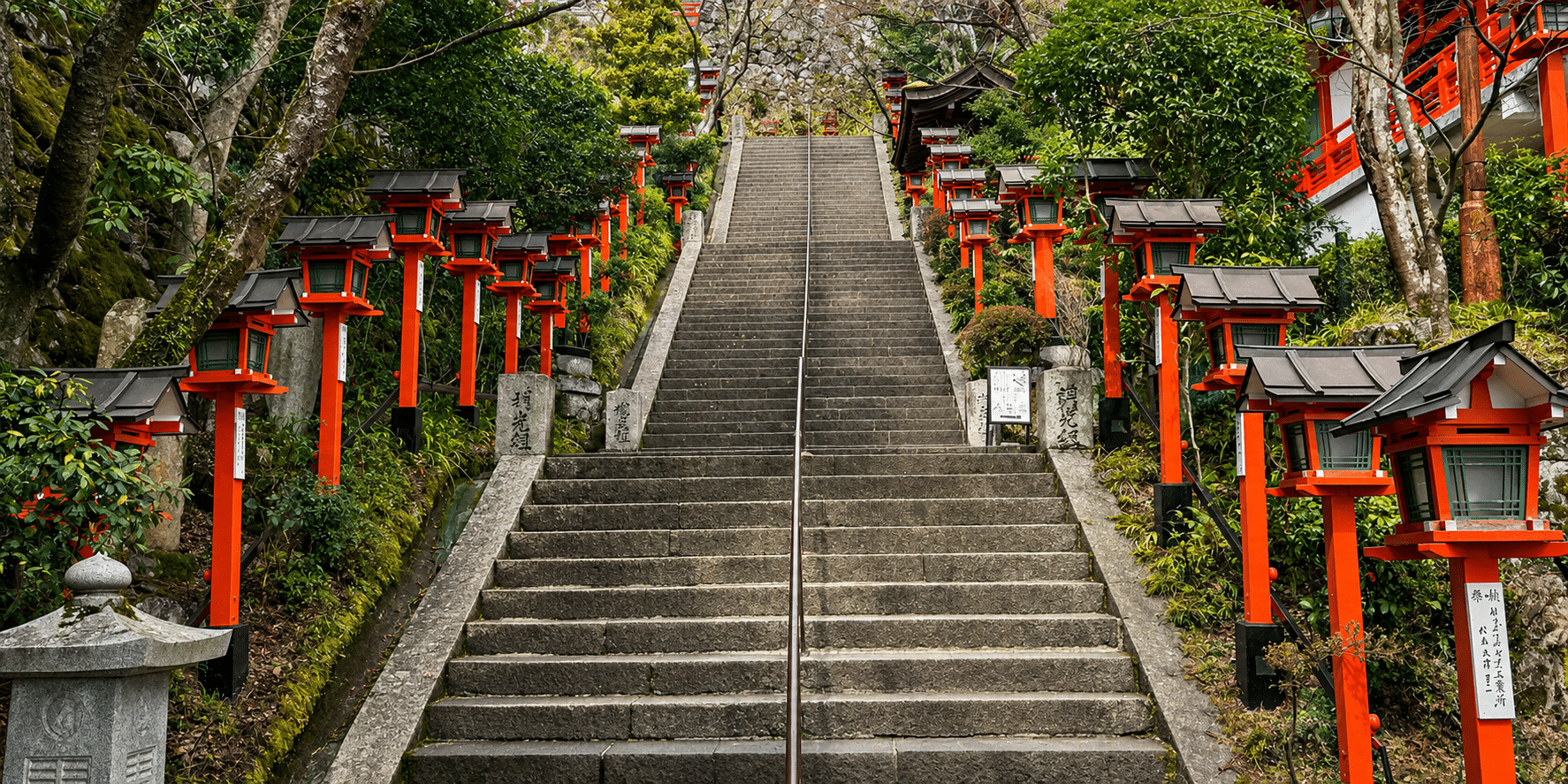
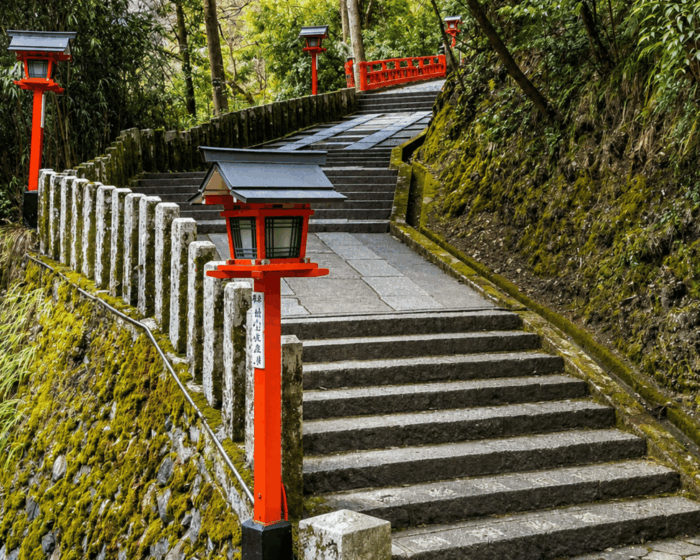
The first thing that usually surprises people is how physical Kurama is. Photos flatten it. Videos flatten it. But once you begin climbing, your attention narrows almost automatically. Your breathing changes. Your legs start working. The stone staircases keep rising through the forest beneath enormous cedar trees.
As the climb continues, the rhythm of the mountain starts taking over. Your breathing settles into the pace of the stairs. Conversation becomes less constant. People naturally spread out along the path beneath the cedars.
Gradually your attention begins simplifying. You notice smaller things. The sound of water moving through the valley. The rhythm of your breathing. The feeling of the stairs beneath your feet. The farther you climb, the quieter your thinking often becomes.
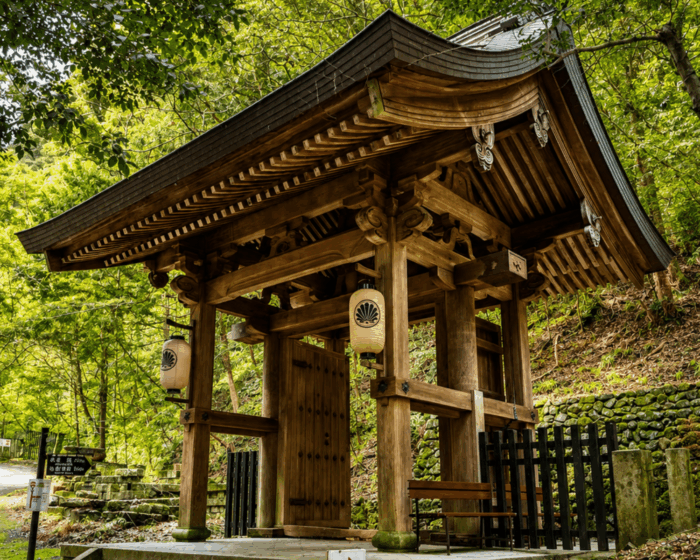
You pass through gates. You stop at purification fountains. You move from crowded areas into quieter ones. The deeper you climb, the less performative everything becomes. Eventually you reach places where people naturally stop talking, not because there’s a rule, but because the mountain changes the atmosphere around you.
One of the most interesting things I’ve watched happen over the years is what occurs on the second or third climb. The first climb is usually excitement. People are taking photos, trying to orient themselves, looking for “the Reiki places.” But by the second ascent something shifts. People stop trying to consume the mountain. They start settling into it. The pauses become quieter. The walking becomes steadier. People sit longer under the trees. The mountain stops feeling like a tourist destination and starts feeling more like practice.
One of the things I’ve noticed over repeated pilgrimages is that the mountain seems to work on people gradually. Not only emotionally, but physically too.
The first few climbs can be difficult. My knees usually ache at the beginning of the trip now that I’m older. The stairs feel steeper each day. But something strange often happens after several ascents. The pain starts disappearing. My body begins feeling lighter instead of more exhausted. I often find myself telling students that it feels like the mountain is healing me through the repeated climbs.
Even after leaving the mountain, many people notice their minds feel quieter for days afterward. Simpler. Less crowded. Less internally complicated.
After enough time on Kurama, many people begin speaking about the mountain almost the way they would speak about a person. Not literally, and not as a kind of fantasy, but because the experience becomes difficult to describe otherwise. The mountain begins feeling less like scenery and more like presence. Less like a backdrop for spiritual practice and more like part of the practice itself.
That’s the part I think many Reiki practitioners miss when they think about Kurama only historically. Kurama is not important merely because Usui went there. Usui went there because mountains like this already mattered.
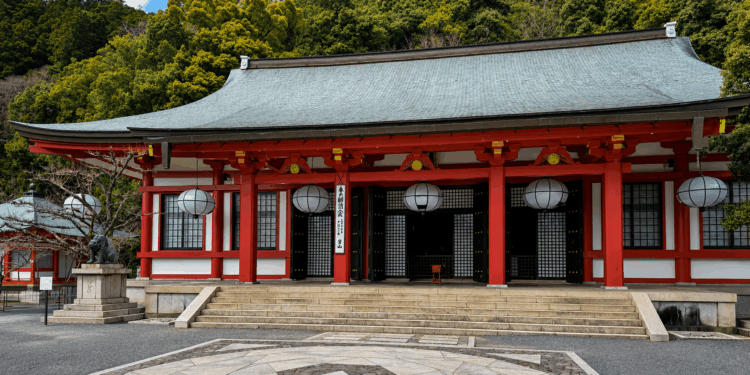
Long before Reiki existed, Kurama was already a place of pilgrimage, ascetic training, prayer, meditation, ritual purification, and mountain practice. Tendai Buddhism, Shugendo, Shinto, tengu legends, waterfall austerities, sacred trees, and devotion to figures like Bishamonten and Kannon were all part of the mountain’s religious atmosphere long before Usui climbed there. Later, Kurama would develop the modern Sonten theology associated with Mao-son and Kurama Kokyo.
That’s why I think pilgrimage matters more than tourism. The repeated climb changes the experience.
Christopher Tellez and I organize Reiki pilgrimage journeys to Japan through the San Francisco Reiki Center, usually twice each year, and one of the most important parts of the trip is that participants climb Mount Kurama multiple times during the journey. That matters more than people realize because Kurama unfolds slowly.
The first climb introduces the mountain. The second climb introduces you to yourself on the mountain. By the third climb, many people no longer feel like they are visiting. The mountain starts feeling strangely familiar, almost relational.
Somewhere in the middle of all this, many Reiki practitioners quietly realize something important. Kurama does not feel like the “source” of Reiki because it explains Reiki. It feels like the source because it cultivates the kind of inner condition from which Reiki could emerge.
That’s very different.
You begin understanding Reiki less as an isolated technique and more as part of a much older culture of cultivation, attention, embodiment, and spiritual discipline.
Honestly, I think this is one of the reasons people come home from Kurama changed even when nothing dramatic happens there. The mountain reorganizes people, more quietly than they expected, more physically than they expected, and often more deeply than they expected too.
If you’re interested in joining one of the upcoming Mount Kurama pilgrimage journeys organized through the San Francisco Reiki Center, you can find more information here:
Continue the Exploration
If you are interested in the deeper foundations of Reiki practice, its history, and how it becomes embodied through daily training, you can explore these themes in the Substack publication “Living with Reiki.”
There the focus is on what it means to live with Reiki over the long path, not only as a healing practice but as a way of cultivating the heart-mind in ordinary life.
👉 Subscribe on Substack to keep reading.