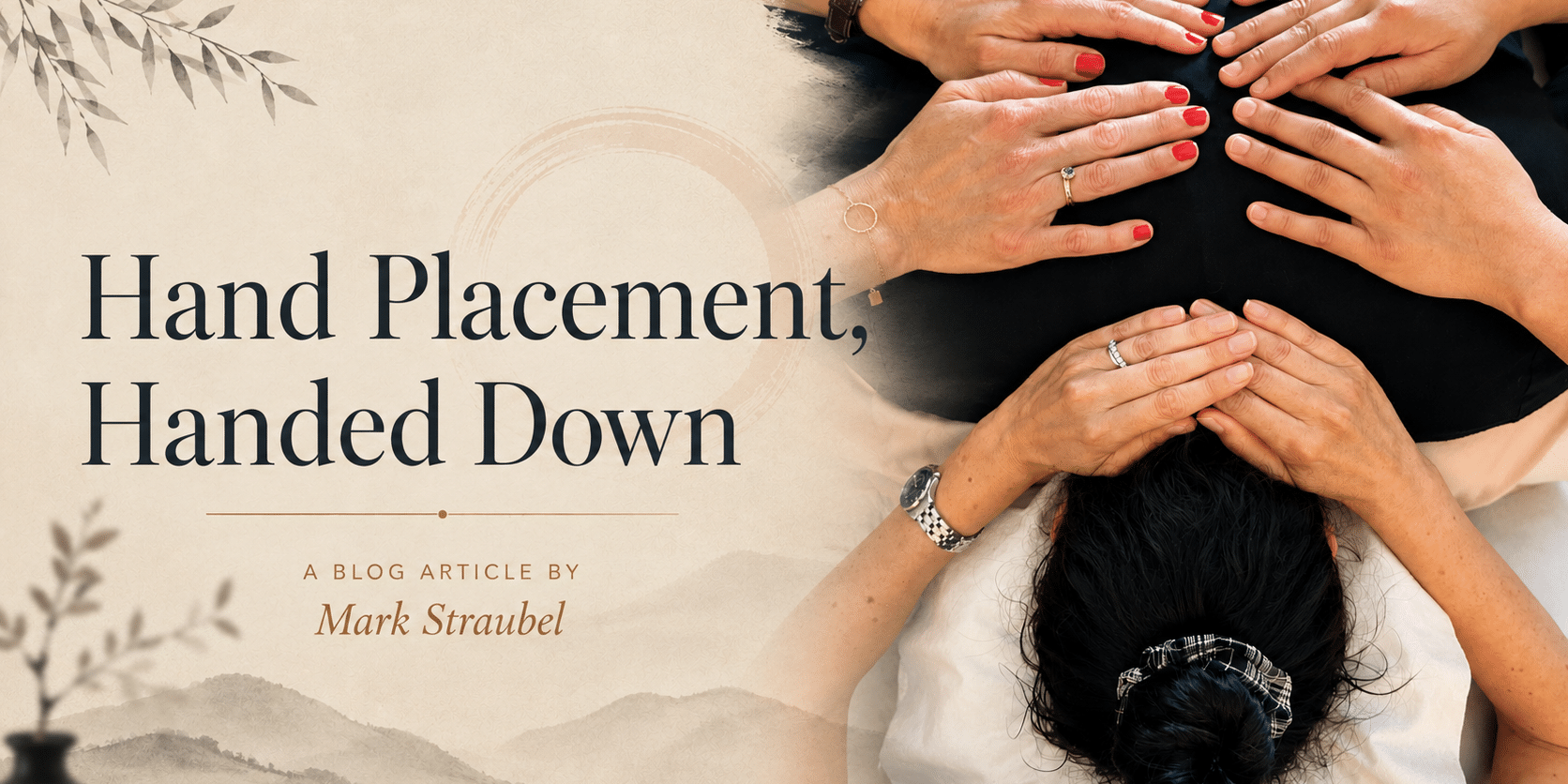
You hear it a lot now — that hand placement doesn’t really matter in Reiki, that the energy goes where it’s needed, so you can put your hands wherever feels right. I understand why people say it. But it doesn’t line up with how the practice was actually taught.
Not long ago I heard a Reiki student say they’d given up self-treating the way they were first taught. These days they just rest both hands in a single position on the legs, and by their account that gives them a full treatment. I respect everyone’s own experience, and I mean that — but I’ll be honest, a part of me recoiled in horror. Not at the person, but at how much of the practice had quietly slipped away, and how little of it seemed to be missed.
Usui Sensei’s Hikkei (handbook) has a section called the Ryōhō Shishin, a guide to treatment. It’s specific. It lists a condition and then tells you where to place the hands for it: the head, the stomach, the organs. Usui Sensei wasn’t being vague or leaving it to intuition. He was writing down what worked, and where, for a given problem. There’s nothing willy-nilly about it.
Hayashi Sensei built on that. He ran a busy clinic in Tokyo, saw a lot of people, and worked out a full sequence of hand positions you could follow from start to finish, whether or not the person on the table could tell you what was wrong. That wasn’t a watering-down of Usui Sensei’s work. It’s what you do when you’re paying attention to results and you want the treatment to hold up in someone else’s hands.
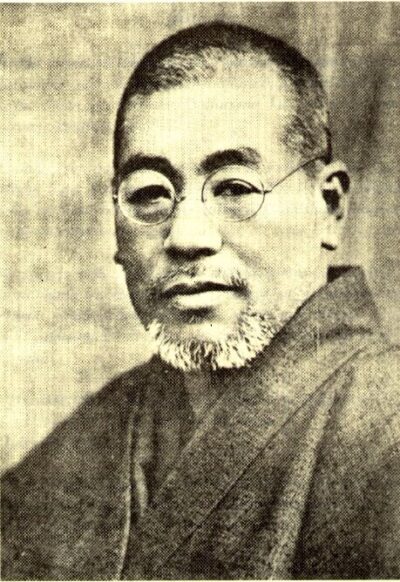
Takata Sensei brought those positions to the West, and by every account she was strict about them. Learn them, hold them, do them right. The foundational positions most of us were taught come down from her, through Hayashi Sensei. They came to us with names attached. Somebody decided they mattered enough to name and to pass along.
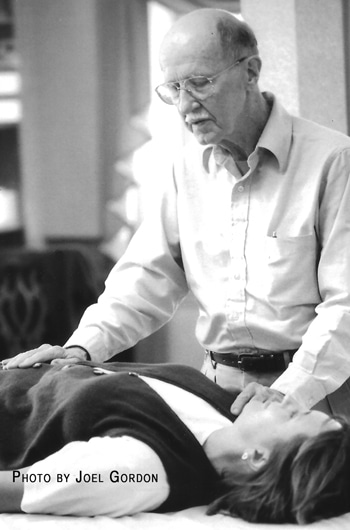
In my lineage, John Harvey Gray was a stickler for correct hand positions. He took his entire training straight from Takata Sensei — one of the few she named to carry her work forward — and he taught it for the rest of a long life. He drilled placement and he drilled scanning, and he treated both as things you get right, not things you approximate.
So, when I hear that placement is interchangeable, I don’t take it as a deeper kind of trust. The whole line of this practice — Usui Sensei to Hayashi Sensei to Takata Sensei — is a record of people who found that where you put your hands matters, and who took the trouble to write it down and teach it carefully. I’d rather honor that than set it aside.
That’s how I treat placement in my own work: as a form to learn properly, the way I’ve learned everything else worth doing. Reiki as a dō (“the way”- practiced as a method of self-cultivation) means the shape itself is part of the teaching. You hold the positions correctly enough times that your hands stop asking where to go.
A word so I’m not misread. None of this is a knock on reiji-hō or on byōsen scanning. Reiji-hō — asking the energy to guide the hands to where they’re needed — and byōsen, feeling for the reaction in the tissue and letting it tell you where to stay and how long, are not the same as putting your hands anywhere. They’re trained skills, each with its own name and its own discipline. The tradition holds all of it: fixed positions you learn cold, and the sensing and guidance that tell you where a given body is asking for more. One doesn’t cancel the other. What I’m pushing back on isn’t intuition — it’s the shrug that skips the trouble of learning any of it.
I don’t doubt the energy goes where it’s needed. But placing the hands well is still the practitioner’s part of the work, and the tradition was never shy about telling us how.