Why Traditional Reiki Treatment Uses Touch
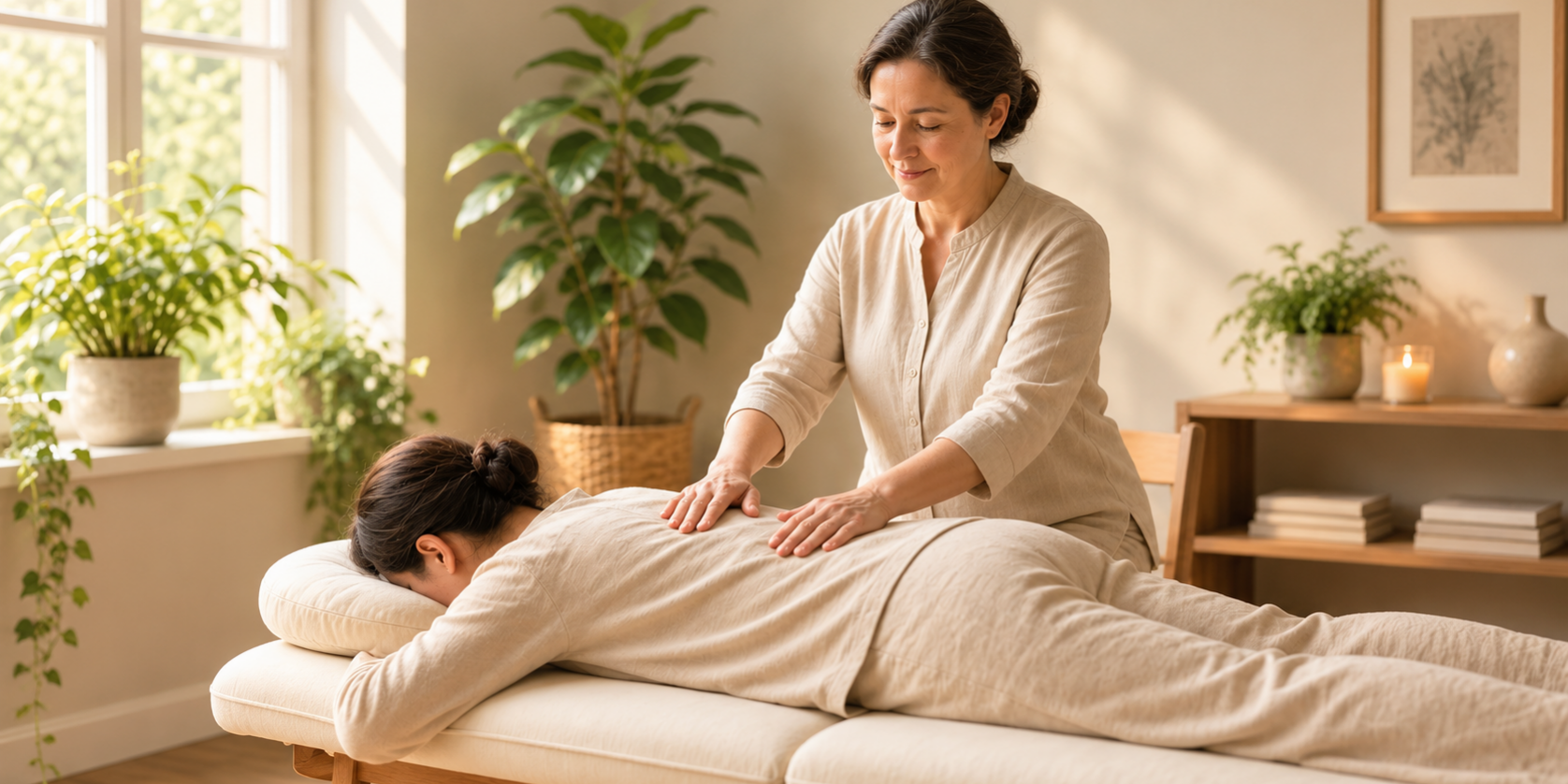
Reiki is a hands-on practice. That’s really the whole point, and it’s one of the things that seems to surprise people today.
In Japanese, teate refers to treatment or care and literally contains the characters for “hand” and “apply.” Early Reiki practitioners also used the term teate ryoho, or hands-on treatment. Tomita Kaiji, a student of Usui Sensei, called the method he later developed Tomita-ryu Teate Ryoho. The hands go on the body.
That’s how I was taught, and that’s how I practice.
The line I was taught runs from Usui Sensei to Hayashi, Hayashi to Takata, Takata to John Harvey Gray, Gray to Brian Brunius, and then to me. The basic method hasn’t changed along the way. When I went to Japan and attended Hyakuten Inamoto Sensei’s Reiki circle in Kyoto, I saw the same thing there. Reiki was hands-on. I have also had treatments from Gendai and Jikiden Reiki practitioners, and it was no different. Their hands rested on the body, and came up only when touch would have been too sensitive or private.
That doesn’t mean the hands always have to touch.
There are obvious times when they shouldn’t. A burn, an open wound, an infection, a fresh fracture. Anywhere touching could hurt the person or interfere with healing. There are also areas of the body where keeping a little distance is simply more respectful or comfortable. In those situations, the hands come up and work just above the body.
But that’s different from making hands-off the normal way of giving Reiki.
This is something I see in class. People come in who have received Reiki before, and quite often the practitioner never actually touched them. Their hands stayed several inches above the body for the entire session. So when I tell them Reiki is a hands-on practice, they’re surprised.
I understand why. Hands-off Reiki has become common enough that many people now think that’s what Reiki is.
Then we put the hands where they were taught to go. They feel the difference. Sometimes it’s immediate. Sometimes it isn’t. But there is something about actually placing the hands on the body that is missing when the hands never make contact.
It works the other way too. For me as the practitioner, contact is how I read the body. The energetic side I can pick up either way, hands on or hands held above. The physical detail only comes through touch: the temperature of the skin, the tension in a muscle, tissue that’s tight or holding and then softens and lets go under the hands, the small changes in breathing and settling as the session goes on. Hovering gives me none of that, and I can’t work with what I can’t feel.
That’s really the point.
As I wrote in my previous article, Hand Placement, Handed Down, the hands-on method is what was handed down to me. The hands go on the body.
When Hands-On Treatment Isn’t Possible
Distance treatment, also called absent treatment, is real, and it’s part of the system. The Japanese term is enkaku chiryo. Often it’s for someone who isn’t present. But it can also be done with the person right there in the room, when circumstances prohibit touching or even hovering: a patient fixed in a hospital bed, or a body part you can’t reach. It’s a deliberate method, used when the situation calls for it.
When hands-on treatment is possible, that is always preferable.
Hovering has its place, and there are times when it’s the right thing to do. But it’s the exception. The traditional practice is hands-on.
Experience Hands-On Reiki
If you’ve received Reiki before but have never experienced a traditional hands-on treatment, you can book a session at NYC Reiki Center. Our practitioners work directly with the body, raising their hands when touch isn’t appropriate or possible.
Mark Straubel is a Reiki Master Practitioner at NYC Reiki Center and is available for private treatments.
Book a Reiki treatment with Mark →
You can also make an appointment with Brian Brunius or one of the other practitioners at NYC Reiki Center.
Want to Learn Reiki?
Hands-on treatment is taught from the beginning at NYC Reiki Center. In Brian Brunius’s two-day First Degree Reiki class, students receive four initiations and learn the traditional hand positions for self-treatment and for treating others. You’ll practice giving and receiving Reiki during the weekend rather than learning the method only as theory.
Already a Reiki Student?
Mark leads NYC Reiki Center’s weekly online Reiki Self-Treatment Circle for students in the John Harvey Gray lineage. The hour is spent practicing together, largely in silence, with the hands on the body.
More from Mark
In Hand Placement, Handed Down, Mark writes about another part of the same question: if Reiki flows where it is needed, does it still matter where we put our hands?